Amata’s South Pacific Tuna Treaty Act in Final NDAA
Washington, D.C. – Congresswoman Uifa’atali Amata is highlighting a new legislative success, as a House-passed bill she sponsored, the South Pacific Tuna Treaty Act, has been included as part of the year’s biggest Defense bill, up for final passage in a few days. Amata’s bill had already passed the House in May, when she gave a speech in its support on the floor of the U.S. House of Representatives, and is now a section of the National Defense Authorization Act (NDAA), S. 1017. The House vote on final passage of the House-Senate negotiated NDAA is expected later this week.
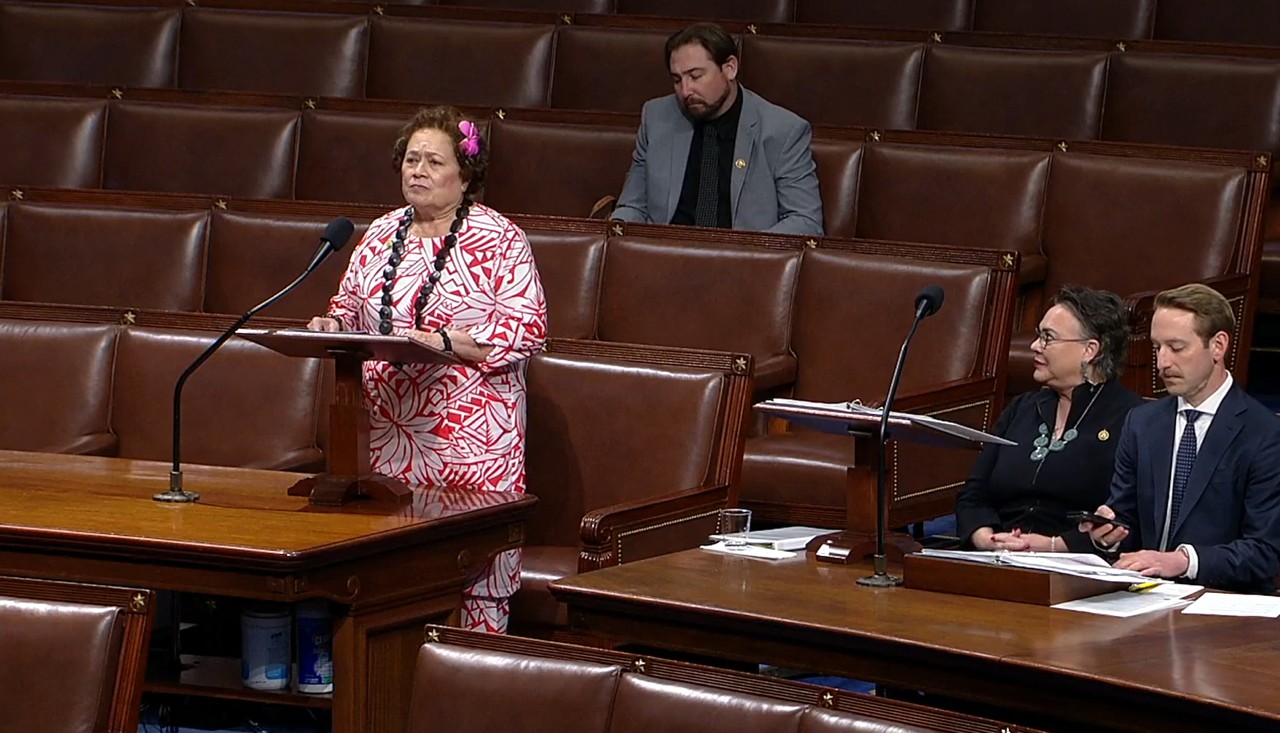
Amata’s bipartisan legislation, introduced with Congressman Ed Case (D-Hawai’i) as the original cosponsor, provides congressional direction and statutory authority to fully implement the South Pacific Tuna Treaty and supports the stability of U.S. tuna fleet operations. This treaty was negotiated among the U.S. and 16 Pacific Islands nations, operating on a Memorandum of Understanding awaiting Congress to pass these policies into law.
“It’s wonderful to see this lengthy effort coming to a successful conclusion, with my bill now part of major defense legislation that has been passed for 65 straight years,” said Congresswoman Amata. “The Tuna Treaty itself, followed by our legislation, represents years of work by our nation’s diplomats and bipartisan support in Congress. I can’t possibly name everyone who had a part, but I especially thank Natural Resources Committee Chairman Bruce Westerman and Congressman Case.”
“In beautiful American Samoa, our marine economy depends on fishing, and is a constant priority,” Amata continued. “Implementing this treaty helps conclusively guide operations and decision-making for our fleet, and secure U.S. tuna in our national food supply chain.”
Amata’s previous bill was also passed by the House in 2024 but had not yet passed the Senate when the 118th Congress finished. In contrast, in this Congress, the House passed her previously vetted bipartisan bill more than a year earlier in the two-year Congressional session, and the Senate recognized its importance and included it in larger “must pass” legislation – the NDAA has been passed into law every year for over six decades.
Amata’s bill amends the South Pacific Tuna Treaty Act of 1988 to reflect the amendments to the Treaty, building on a decade of effort. In 2022, the Senate provided overwhelming bipartisan support for advice and consent to ratification, and Amata’s bill completes this longstanding process and resolves restrictions. The Treaty officially stabilizes high seas fishing days and codifies access to various island nations’ EEZ waters.
Testimony in 2024 highlighted that the U.S. tuna purse seine fleet has been reduced in a relatively few years’ time from 34 vessels to 13 vessels, due to economic challenges from regulation, reduced access, and the problem of Illegal, Unreported and Unregulated (IUU) fishing. In a hearing of the Subcommittee on Water, Wildlife and Fisheries, on which Amata serves, William Gibbons-Fly, the Executive Director of the American Tunaboat Association, testified that the last true “distant water fishing fleet” under the U.S. flag operates from Pago Pago Harbor, and are “multi-generational, family-owned businesses with a long and storied history as an important part of the U.S. fishing industry.”
###