Pago Pago Harbor
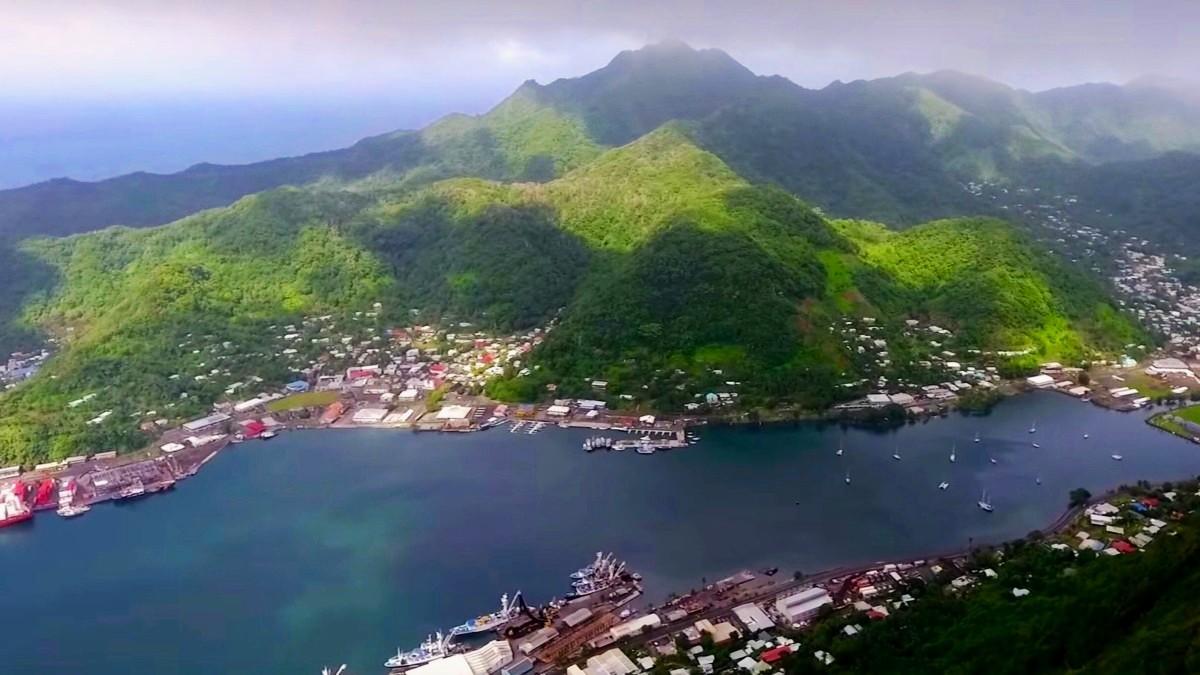
Pago Pago Harbor — A Natural Deep-Water Harbor of Strategic, Cultural, and Economic Importance
Pago Pago Harbor is one of the world’s largest and deepest natural harbors, located on the southeast coast of American Samoa on the island of Tutuila. Carved from the submerged caldera of an ancient volcano, the harbor extends more than two miles inland, reaching depths greater than 400 feet (120 m) and offering an exceptionally sheltered anchorage protected by surrounding mountain ridges.
Geography and Natural Formation
Pago Pago Harbor was formed when the southeast wall of the ancient Pago Shield Volcano collapsed, allowing the Pacific Ocean to flood the crater. The result is a largely enclosed natural harbor—more than 50 % landlocked by steep volcanic ridges—that provides calm, deep, and protected waters for ships of all sizes. The harbor’s natural depth and sheltered characteristics have made it one of the premier deep-water ports in the South Pacific.
The surrounding landscape features dramatic volcanic peaks including Mount Matafao, Mount ʻAlava, and Rainmaker Mountain, whose lush slopes frame the harbor and contribute to its celebrated scenic beauty.
Historical and Strategic Significance
Beginning in the late 19th century, Pago Pago Harbor became an essential location for seafarers, and in 1872 the United States negotiated rights for a coaling station here. It later became a formal U.S. naval station in 1900 and remained active through the mid-20th century. During World War II, the harbor’s strategic position and deep waters supported military logistics and Pacific operations, with coastal defenses installed to protect the territory and the vital harbor.
The harbor’s ability to shelter large vessels and its position along key Pacific maritime routes continue to be important for both defense and commerce today.
Economic and Community Hub
Pago Pago Harbor serves as the primary maritime gateway for American Samoa and supports a range of commercial activities, including cargo handling, fishing fleets, and cruise ship visits. The Port of Pago Pago operates container and multi-purpose terminals that facilitate the movement of goods to and from the territory, enabling economic activity and connection to global markets.
Several historic villages and communities—such as Utulei, Fagatogo, Malaloa, and Atuʻu—are situated along the harbor’s shoreline. Fagatogo serves as the seat of the territorial government, and Pago Pago’s harborfront remains a focal point for daily life, commerce, and cultural exchange.
Environmental and Cultural Value
Amid its economic and strategic roles, Pago Pago Harbor also supports local marine ecosystems and cultural traditions. Its waters are central to fishing, recreation, and community gatherings, while the steep hillsides and verdant forests above offer trail access, native biodiversity, and scenic vistas.
Ongoing stewardship efforts by local and territorial agencies help maintain water quality, protect coral reef areas at the harbor’s edges, and balance development with environmental conservation.