Pago Pago International Airport (PPG)
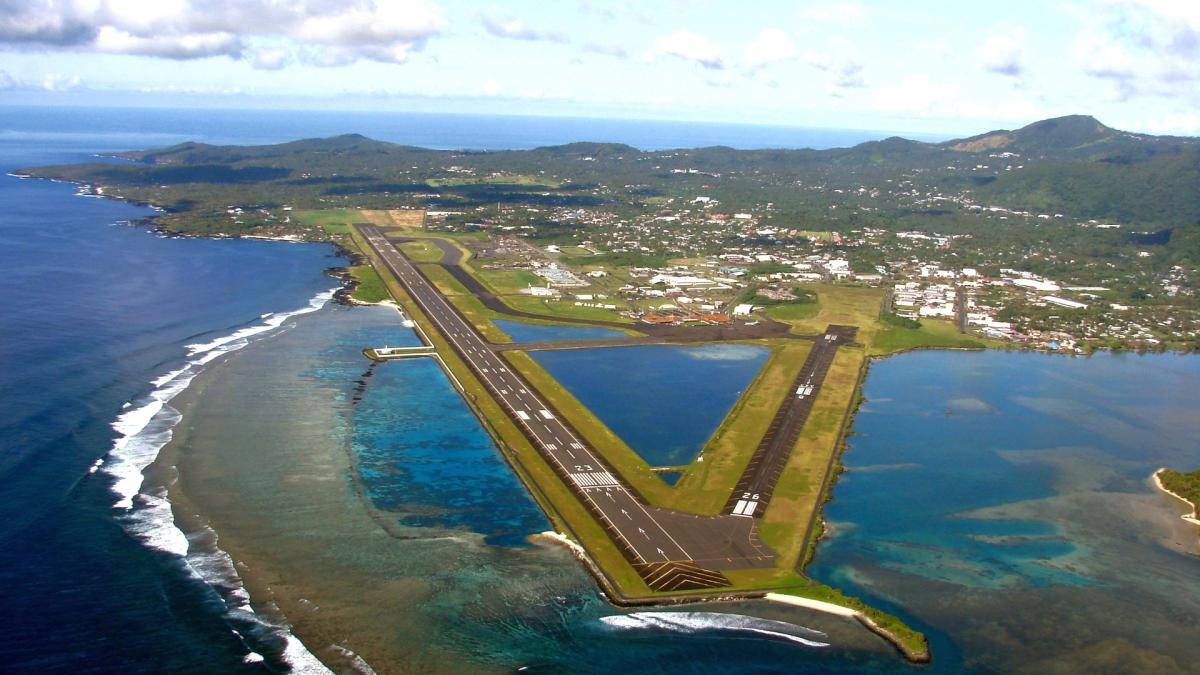
Pago Pago International Airport (PPG) — Pacific Gateway for People, Commerce, and Security
Pago Pago International Airport (PPG) is the primary commercial and cargo aviation facility serving American Samoa, located approximately 7 miles (11 km) southwest of central Pago Pago on the village and plains of Tafuna on the island of Tutuila. Owned and operated by the Department of Port Administration of the American Samoa Government, PPG is essential to connecting the territory with the United States and the broader Pacific region, supporting travel, commerce, emergency response, and strategic operations.
Airport Overview and Infrastructure
Pago Pago International Airport covers approximately 700 acres of land and sits at an elevation of about 32 feet (10 meters) above sea level.
The airport’s primary runway, designated 05/23, measures 10,000 feet (3,048 meters) long and 150 feet (46 meters) wide. This length and surface strength make it capable of accommodating some of the largest aircraft in the world, including heavy cargo jets and wide-body airliners, supporting both commercial and military operations as needed.
A secondary runway, 08/26, provides additional operational flexibility for smaller aircraft serving inter-island routes and regional services.
Strategic and Humanitarian Role
Because of its runway length and geographic position, PPG has hosted some of the largest aircraft ever built. Most notably, the Antonov An-225 “Mriya”—the largest aircraft in aviation history—landed at Pago Pago International Airport during the 2009 Samoa earthquake and tsunami relief efforts to deliver emergency power-generation equipment.
More recently, one of the world’s largest operational cargo aircraft, the Antonov An-124, has used PPG for refueling or cargo operations, demonstrating the airport’s continued capacity to support heavy-lift global logistics and emergency transport missions.
History and Military Use
The site of Pago Pago International Airport was originally developed as Tafuna Airfield in the early 1940s as part of the U.S. naval defense infrastructure during World War II. Two coral runways were constructed beginning in 1941–1942, and Tafuna Airfield became an important base for Marine Corps aviation squadrons tasked with the air defense of American Samoa early in the Pacific War.
After World War II, the airfield transitioned to civilian use and underwent several expansions throughout the 1960s and later decades. The main runway was extended and modernized to support jet aircraft, with further improvements in 2001 enabling the full 10,000-foot length that accommodates long-range trans-Pacific flights and heavy cargo operations today.
Economic and Community Importance
As the principal aviation hub for the territory, Pago Pago International Airport is critical to American Samoa’s economy—facilitating tourism, passenger travel, perishable cargo transport, and regional connectivity. Its infrastructure supports air service that links families, businesses, and essential services across vast distances.
The airport also plays an ongoing role in national defense readiness and humanitarian response capacity within the Pacific, underscoring its strategic significance to both local communities and broader U.S. interests.