Culture

Washington, D.C. – Congresswoman Uifa’atali Amata released the following statement in honor of Martin Luther King Jr. Day:
“Each year in the United States we honor the life and legacy of Dr. Martin Luther King, Jr., because of the enormous role his message has had in shaping modern civil rights, even beyond the borders of the United States, but especially deeply influencing American thought, academics, laws, politics, and more.
Washington, D.C. — Congresswoman Uifa’atali Amata released the following message for New Year’s Day.
Washington, D.C. – Congresswoman Uifa’atali Amata released the following statement in celebration of Thanksgiving Day 2024:
Psalm 69:30 ~ I will praise the name of God with a song, and will magnify him with thanksgiving.
“This brief verse in the book of Psalms is one of many special thanksgiving verses in the Bible, and it reminds me so much of our people, who dearly love to sing from early childhood and all through life. We are grateful for our beautiful islands, which are a touch of paradise.
Pago Pago – Congresswoman Uifa’atali Amatareleased the following statement for White Sunday:
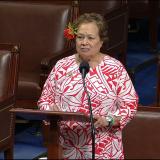
Washington, D.C. – Congresswoman Uifa’atali Amataspoke on the House floor on Monday, emphasizing the importance of U.S. efforts to protect religious freedoms worldwide, while serving as Floor Manager for House passage of the reauthorization of the U.S. Commission on International Religious Freedom (USCIRF), S. 3764, a bipartisan effort which passed by a vote of 365-20.


Washington, D.C. – Congresswoman Uifa’atali Amata visited some of the family of Taylor (Teila) Tuli Wily to pay her respects and pay tribute to his memory, and is sending condolences to all who knew and loved him.
Washington, D.C. – Congresswoman Uifa’atali Amata is highlighting the national Juneteenth holiday, created by Congress in 2021. This holiday celebrates freedom by recognizing the historic events of June 19, 1865, which is the day that news of freedom traveled to the last known place practicing slavery in the United States. President Abraham Lincoln had issued the Emancipation Proclamation more than two years before on New Year’s Day, 1863.